
Chữ ký điện tử vs chữ ký số: Khác biệt như thế nào?
Không phải tất cả các loại chữ ký trực tuyến đều giống nhau. Chữ ký điện tử (eSignature) và chữ ký số (digital signature) đều cho phép bạn ký tài liệu một cách điện tử, nhưng chúng sử dụng các phương thức bảo mật khác nhau. Chúng tôi giải thích sự khác biệt và lý do tại sao một loại lại an toàn và có giá trị pháp lý cao hơn loại kia.
Mục lục
- 1. Chữ ký điện tử là gì?
- 2. Chữ ký số là gì?
- 3. Những điểm khác biệt chính giữa chữ ký điện tử và chữ ký số
- 4. Khi nào nên sử dụng từng loại
- 5. Nên chọn chữ ký điện tử hay chữ ký số?
- 6. Ký số xác thực: Bước tiếp theo trong bảo mật eSignature
Chia sẻ bài viết này
Thoạt nhìn, chữ ký điện tử (eSignature) và chữ ký số (digital signature) có vẻ giống nhau. Tuy nhiên, điều này không hoàn toàn đúng. Cả hai đều cho phép cá nhân ký các hợp đồng pháp lý và tài liệu trực tuyến, nhưng lại thực hiện theo những cách khá khác biệt. Chúng tôi sẽ làm rõ hai thuật ngữ thường bị nhầm lẫn dưới đây.
Chữ ký điện tử là gì?
Nói đơn giản, chữ ký điện tử (eSignature) là một phương thức ký tài liệu số. Bạn có thể hình dung nó như một phiên bản kỹ thuật số của chữ ký tay - nhanh chóng, dễ dàng và được pháp luật công nhận ở hầu hết các quốc gia.
Chữ ký điện tử thường là một biểu hiện điện tử của sự đồng ý, tức là ai đó chấp thuận hành động hoặc đồng ý với các điều khoản của tài liệu, giống như họ ký bằng bút trên giấy. Một eSignature có thể đơn giản như việc gõ tên, bấm vào nút 'Tôi đồng ý', hoặc vẽ chữ ký trên màn hình cảm ứng.
Tại Hoa Kỳ, chữ ký điện tử được công nhận hợp pháp theo Đạo luật ESIGN, làm cho giá trị pháp lý của nó tương đương chữ ký viết tay. Các quy định eIDAS cũng trao giá trị pháp lý tương tự ở EU.
Tuy nhiên, mức độ bảo mật có thể khác nhau tùy thuộc vào phương pháp sử dụng. Ví dụ, chỉ cần bấm 'Tôi đồng ý' trên một trang web thì không an toàn bằng eSignature có xác minh danh tính bằng cách gửi một liên kết hoặc mã duy nhất tới email. Nói chung, eSignature phù hợp cho những tài liệu cần ký nhanh chóng và không đòi hỏi mức độ bảo mật cao nhất.
Chữ ký số là gì?
Chữ ký số là một cách ký tài liệu điện tử bảo mật hơn vì sử dụng một kỹ thuật mã hóa đặc biệt gọi là Hạ tầng khóa công khai (Public Key Infrastructure - PKI). PKI giúp xác thực danh tính người ký và phát hiện liệu tài liệu có bị chỉnh sửa hay không.
Cách thức PKI hoạt động như sau:
- Các tổ chức đáng tin cậy, gọi là cơ quan chứng thực, xác minh danh tính người ký.
- Một con dấu số mã hóa một mã duy nhất để bảo vệ tài liệu khỏi bị sửa đổi.
- Vì mã này là duy nhất, người ký không thể phủ nhận đã ký tài liệu đó. Điều này gọi là không thể chối bỏ.
So với chữ ký điện tử, chữ ký số rất phù hợp cho những tài liệu cần xác minh danh tính chặt chẽ và bảo vệ khỏi chỉnh sửa. Ví dụ như Chữ ký điện tử đủ điều kiện (Qualified Electronic Signatures - QES), là loại chữ ký số tuân thủ các quy định nghiêm ngặt của EU.
Những điểm khác biệt chính giữa chữ ký điện tử và chữ ký số
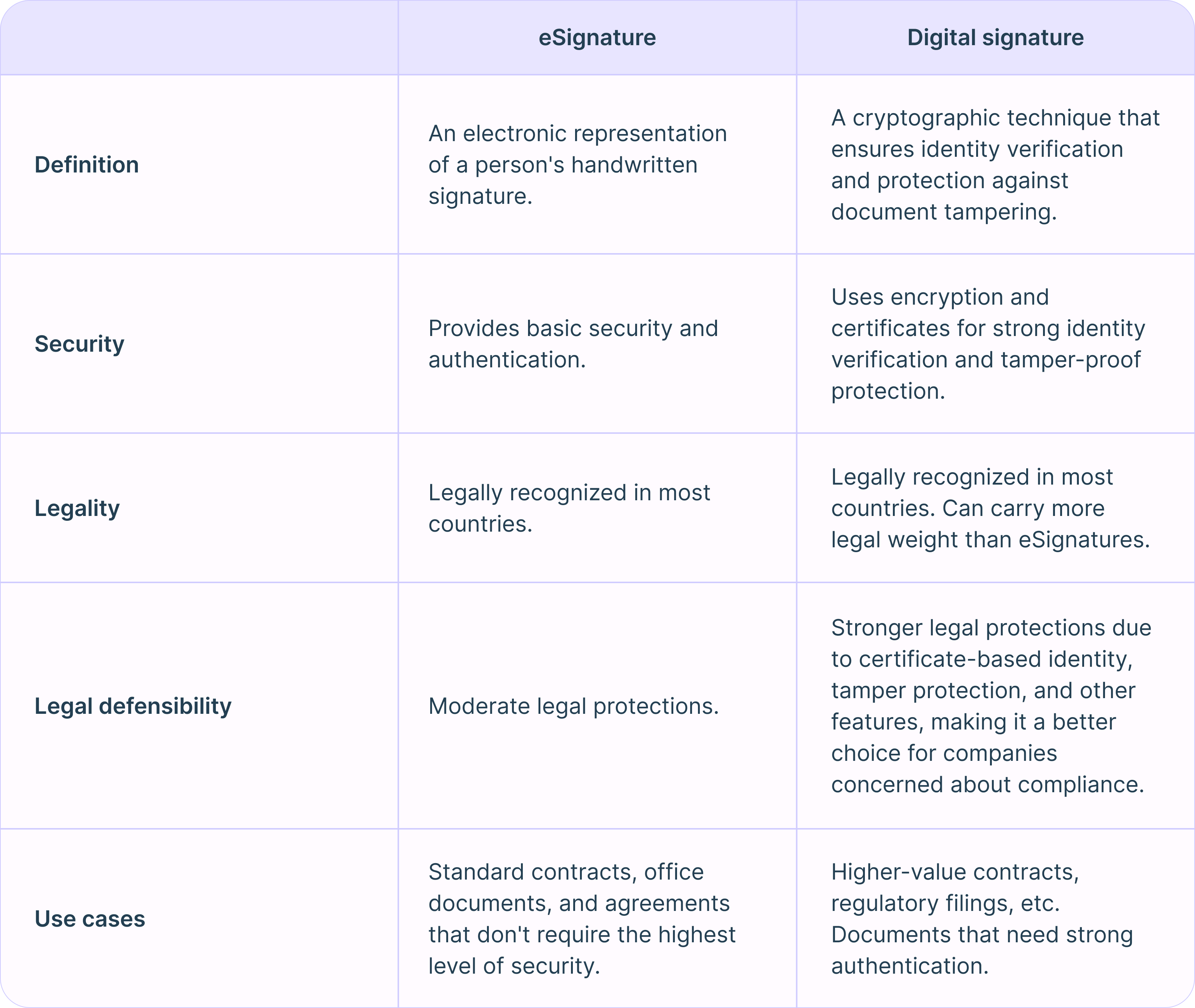
Cả hai loại chữ ký đều được công nhận hợp pháp tại hầu hết các quốc gia hiện nay. Tuy nhiên, chữ ký số đem lại sự đảm bảo cao hơn về danh tính và giá trị pháp lý, là lựa chọn phù hợp cho các doanh nghiệp trong những lĩnh vực có tính quản lý nghiêm ngặt như tài chính, y tế, dịch vụ công. Đây cũng là lựa chọn tốt cho các công ty cần tuân thủ và bảo mật ở mức cao.
Dưới đây là bảng so sánh hai phương thức giúp bạn nhận thấy sự khác biệt một cách trực quan:
Khi nào nên sử dụng từng loại
Nếu tốc độ và sự tiện lợi là yếu tố quan trọng nhất, chữ ký điện tử là lựa chọn hợp lý. Nó cho phép mọi người ký tài liệu của bạn một cách nhanh chóng mà không cần in ấn hay gửi chuyển phát giấy tờ.
Giả sử bạn muốn một nhân viên ký vào mẫu đề nghị hoàn ứng chi phí. Với tài liệu này, chữ ký điện tử hoàn toàn phù hợp vì có lẽ không chứa thông tin pháp lý hay tài chính nhạy cảm. Nhân viên có thể ký nhanh mà không cần các biện pháp bảo mật bổ sung.
Nếu bạn xử lý những tài liệu có tính pháp lý quan trọng hơn, chẳng hạn như hợp đồng hay các thỏa thuận trong lĩnh vực yêu cầu quản lý chặt chẽ, chữ ký số sẽ là lựa chọn thông minh hơn. Bởi nó vừa xác thực danh tính người ký, vừa đảm bảo tài liệu không bị thay đổi theo bất kỳ cách nào, điều có thể ảnh hưởng lớn đến doanh nghiệp của bạn.
Ví dụ, bạn muốn một tổ chức ký vào hợp đồng hợp tác kinh doanh xác định rõ vai trò, trách nhiệm và phân chia tài chính. Chữ ký điện tử sẽ không đủ mức bảo mật bạn cần để xác thực người ký hoặc ngăn chặn việc chỉnh sửa trái phép. Trong trường hợp này, hãy sử dụng chữ ký số để đảm bảo hợp đồng chống giả mạo và có giá trị pháp lý vững chắc.
Nên chọn chữ ký điện tử hay chữ ký số?
Sau cùng, mọi việc tùy vào nhu cầu của doanh nghiệp bạn. Chữ ký điện tử phù hợp cho các loại tài liệu hàng ngày, rủi ro thấp, trong khi chữ ký số cung cấp thêm lớp xác minh danh tính và bảo vệ chống chỉnh sửa cho các hợp đồng quan trọng hoặc cần tuân thủ quy định.
Với Lumin Sign, bạn có cả quy trình chữ ký điện tử đơn giản và khả năng ký số xác thực chỉ trong một nền tảng, giúp bạn lựa chọn giải pháp hợp lý nhất theo từng tình huống.
Trải nghiệm Lumin Sign miễn phí ngay.
Ký số xác thực: Bước tiếp theo trong bảo mật eSignature
Chữ ký số cung cấp bảo vệ mã hóa mạnh mẽ, nhưng Ký số xác thực còn tiến xa hơn bằng cách gắn các thông tin định danh đã được xác thực bằng mật mã cho từng chữ ký. Điều này tạo ra một tầng xác thực bổ sung, chứng minh người ký chính xác là ai họ khẳng định, chứ không chỉ đơn giản là ai đó có thông tin truy cập đã ký tài liệu.
Xác thực tăng cường này đặc biệt có giá trị vì các hành vi gian lận sử dụng AI khiến các phương thức xác thực truyền thống dễ bị tấn công hơn. Với những doanh nghiệp xử lý hợp đồng giá trị cao hoặc hoạt động trong lĩnh vực quy định nghiêm ngặt, Ký số xác thực mang đến mức độ bảo vệ và tính pháp lý vượt trội mà chữ ký số tiêu chuẩn không có.

Chia sẻ bài viết này