
11 Remote Work Game-Changers
Author
Lumin Team
Published
Dec 17, 2025
Categories
Productivity
Read time
5 min read

Thanks to the rapid development of technology, representatives of many professions can quickly move to innovate working from home. There can be a massive number of reasons for this: the creation of specialized remote teams, repairs in the office, or temporary measures to prevent viral diseases, as is happening now. In light of recent events, even such a corporate giant as Google is sending its employees to "remote locations." Many global companies, including Amazon and Facebook, have adopted remote working technology.
Table of contents
- 1. Remote collaboration: all the pros and cons for the company
- 2. Checklist of the qualities of the ideal remote worker
- 3. Remote employee management: Focus of the company on remote work
- 4. Remote employee management: Correct communication
- 5. Remote employee management: Flexible working hours
- 6. Remote employee management: Effective meetings
- 7. Remote employee management: A unifying corporate culture
- 8. Remote employee management: The cult of trust
- 9. Secrets to successful remote work
Share this post
How do I transfer employees to remote collaboration without harming the work process? What is the best technology for working remotely? How can I maintain and develop a corporate culture at a distance? If you have already sent employees to work from home, this article is for you.
According to the research group, Global Workplace Analytics, remote workers are 22% happier than office workers. 91% of surveyed employees said that switching to innovative work methods, including remote work, has helped them restore the balance between work and personal life. 78% of employees say home tech innovations for remote work have reduced their stress levels. Compared to office colleagues, remote workers are more satisfied with their work in the company. Remote workers are 13% less likely to quit their current jobs in the next five years, and most job seekers and full-time employees are more loyal to those companies that offer the opportunity to work outside the office. So, how can we accurately organize a workflow with innovation ideas at work and remote schedules? And what exactly should an HR specialist pay attention to in this matter?
Why should we consider focusing on remote work at the moment? The current health situation is not conducive to face-to-face collaboration, and this affects employees and companies around the world. Organizations have to keep things going in new environments. For me, everything is simple: I have always believed that work is an activity, not an arrangement. However, many organizations are far from this point of view. Why is this still a problem for many organizations? Too often, telecommuting is considered a luxury. It is perceived as a condition that must be earned and for the absence of which it is customary to blame the HR department. Companies lean toward innovative ideas for work, including tech companies with distinctive architecture for remote work. However, an aspect that is very often overlooked is the attitude of people towards remote work.
Remote collaboration: all the pros and cons for the company
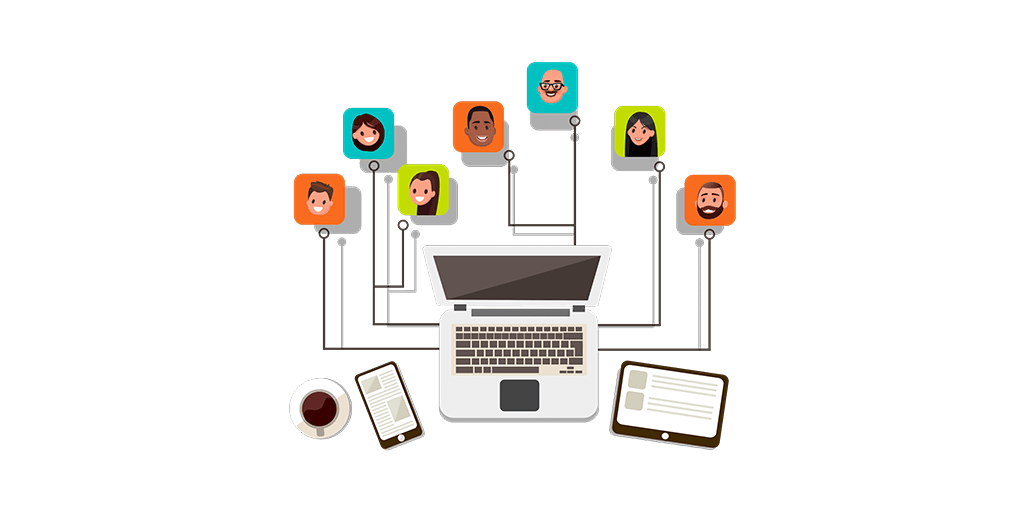
What benefits does a company gain by working with remote tools and technology? In addition to the fact that remote workers rate their level of happiness higher than office workers, they also:
- Are more results-oriented
- Are easily transferred to piece-rate pay and earn for specific work
- Are a money-saving asset as they do not need to spend resources in the form of office supplies or organize a workplace
Along with the distinct advantages for the employees, for the company, such innovation at work can result in some significant disadvantages:
- Remote work is more difficult to control
- Remote employees are more likely to break deadlines than office workers
- It is more difficult for them to concentrate on tasks, leading to distraction
- If an employee does not know how to organize himself, then most likely he will not meet deadlines, and you will lose the right specialist
- The employee loses full communication with the team, and the solution to everyday tasks may become more difficult due to difficulties in communication.
Did you know, it was difficulties with communication that some time ago caused the management of the IT giant IBM to return tens of thousands of their remote employees to their offices? According to the company's managers, a shared space helps employees to cope with tasks more efficiently.
Checklist of the qualities of the ideal remote worker

Not all people using technology for work will be able to work outside the office while remaining efficient. We have collected the main differences between those who can easily switch to remote work at home.
- The ability to self-organize: If there is a need to transfer an employee from the office to a remote location, pay attention to how he copes with current tasks. How often does he break deadlines? Is there a need for constant communication with the team? You can test remote collaboration by starting a few days a week to determine how well an employee is doing remotely. In the case when you are just hiring an employee, pay attention to his work experience outside the office, the number of completed projects, and contact customers. Also, you can conduct a Subjective Control Level test during an interview and, depending on its results, make a decision.
- Responsibility: Let's agree, someone who is not very responsible for performing tasks in the office is unlikely to become an exemplary employee at home. When we work remotely, we not only have to be able to set our deadlines but also be able to take responsibility for the work done or not completed.
- Multitasking: Employees who work from home are much more likely to miss important information. That is why they need to be multi-taskers: track corporate chat messages, keep records, complete tasks, and attend Skype sessions.
- Self-motivation: It is difficult to motivate someone who is not self-motivated. An employee on a remote basis is less involved in everyday corporate life and, as it were, a little away from all the office buns. In remote work, he needs to be able to see his advantages and focus on them, rather than expect the company to stimulate his desire to work.
Remote employee management: Focus of the company on remote work
The company should focus on a remote working technology concept embedded in the culture of the organization in which physical location is irrelevant to accomplishing tasks and maintaining corporate spirit. The culture in which the company is geared towards innovation ideas for work and remote work provides a level playing field for employees, both telecommuting and in the office. This applies not only to technology and tools. It's about treating remote workers the same way you treat office workers, not counting them as secondary.
Remote employee management: Correct communication
First of all, after the transition of an entire team to use hometech innovations and remote collaboration, communication suffers. For employees who are accustomed to consistently communicating in the office, quickly receiving answers to their questions, holding rallies, and "meetings," it may be uncomfortable at first to discuss tasks online. The primary mission of an HR specialist in this matter is to control the employee's transition from offline to online and create all the necessary conditions. Communication between the company and its employees is equally important. During the period when the staff work remotely, it is worth communicating with them as often as possible through information channels, especially on issues relating to working from home. Write a memo for employees that contains the following points:
- An explanation of how working from home will take place (schedule, payment for work, changes in the reporting procedure)
- List the work chats where tasks will be discussed
- Remind them of how they can get the necessary access needed and who to contact should problems arise.
- Indicate how they can get materials to work from home.
Also, all teams need to provide conditions for regular online rallies. To do this, you can use programs such as:
- Skype, with group video chat up to 50 people and the ability to show presentations, videos, etc.
- Slack, with the paid account, you can call up to 15 people.
- Zoom, with the ability to host a conference of up to 100 participants, free of charge.
- Google Hangouts, which allows you to organize a conference with up to 10 participants, and also share files and images in a chat.
- BlueJeans, which offers a paid video call for up to 100 participants and conferences for up to 15,000 participants.
In addition to video calls, you may need:
- Use of work email.
- Cloud-based project management tools.
- Time tracking tools.
- Collaboration space.
- PDF Editors
Remote work requires people using technology for work, transparency, and streamlining online processes. But do not forget that the organization of correct communication in the team is not only the concern of an HR specialist but also of project managers, team leaders, and each team member. Employees must understand their responsibility for the serviceability of equipment and a stable Internet connection.
Remote employee management: Flexible working hours
One additional option is to switch to flexible working hours. This option of innovation at work can be used both in combination with telecommuting work and separately for those workers whose work functions do not allow them to work at home or in another place outside of the office. In such working conditions, it is possible to establish fixed working hours: when the employee must be at work; and variable non-fixed working hours: when an employee can independently decide how long he will perform work. The transition to such a mode of work (as well as remote work mode) does not affect the scope of the employee's rights and the terms of remuneration.
Remote employee management: Effective meetings
Moving communications online as a part of innovation at work is not as easy as it may seem upon first glance. What can be discussed at a meeting in the office can sometimes be decided by voting in a general chat or a poll. You don't always need calls, as they take a lot of the specialists' time. In remote work, everything that can be solved in correspondence is decided in the mail. When calls are needed, they must go through effectively:
- Use calls to explain everyday tasks and collective actions.
- The call should have a specific topic that the participants are familiar with.
- Participants need to be prepared for the topic of the planned call.
As for general meetings with CEOs or heads of departments, they should not be canceled, but simply go online. Remember, every employee needs a sense of belonging to the corporate culture, especially when he is not in the office.
Remote employee management: A unifying corporate culture
According to the Igloo report, about 70% of employees feel distant when working remotely. That is why it is so essential for an HR specialist to maintain a team spirit. Indeed, the functions of an HR manager include not only organizing teamwork, but also recreation. Encourage the use of remote working technology and the creation of informal corporate chats while working remotely, hold creative brainstorming sessions. Consistently publish official information from the company so that employees are always up to date. The staff should not have the feeling that they seem to be dropping out of office life and corporate events. Think about how you can recreate this atmosphere and unite the team after they return to the office. It might be worth planning a team-building exercise or a small corporate party.
Remote employee management: The cult of trust
First of all, trust your team. Your employees don't change as professionals when working from home. Many executives fear that remote working technology hinders productivity due to a lack of full control. But data from a two-year study at Stanford University refutes these concerns: remote work does not reduce but instead increases productivity equivalent to office full-time. Employees who worked at home worked more often on a full shift. They saved the time that is usually spent on distracting conversations over a cup of coffee in the office, being late for work, and the desire to leave early to make time for family.
Once you have hired smart, reliable employees, they will remain intelligent and honest, even if you are not "standing over their heads" in the office, as Jason Freed says in his book Remote. An office is optional: " If you cannot allow your employees to work from home for fear that they will work without your supervision, you are a nanny, not a manager. "
Thus, the task of the HR manager for the period of remote work is to do everything possible on the part of the company so that the employee has the necessary conditions for easy work at home and feels involved in the common cause. Everything else depends on the worker himself. In practice, a good employee performs tasks efficiently, wherever he is, just give him time to adapt.
Secrets to successful remote work

In light of these developments, many organizations have faced unexpected challenges. Many companies have had to cancel events and meetings that involve direct contact with participants and implement temporary policies for remote work. Under these conditions, companies quickly realize how prepared they are for unexpected events. Here's a list of the most useful recommendations for organizing remote work. This is not a complete list, but it works effectively. We hope you find it helpful when you need to work remotely.
- An hour of video communication. Have a team meeting once a week or every fortnight with the camera on, select drinks, and chat for 30-60 minutes on non-work topics. Get to know your colleagues better.
- Separation of home and workspace. Choose a place to work at home that suits your activity. I have four kids who can make noise in the background! Don't forget that your home office is, first of all, HOME.
- One point of access to work. Regardless of device or location, you need to have one permanent point of secure access to all digital content.
- Default video. If you need to make a call, turn on the video. This not only engages employees in the process but also helps determine how they deal with isolation.
- Available materials for the team. If you're holding meetings in the office, you should always keep your presentations, visuals, or notes in a central location, so other employees don't feel like they're being ignored. You can also take photos.
- Digital presentations. When telecommuting in a video meeting, use a digital whiteboard instead of a physical one.
- Scheduling meetings. Working remotely is convenient, but people need physical interaction. Have team meetings at least once a quarter.
- Collaborate in real-time. There is no need to wonder what Office 365 or Google Apps are for.
- Breaks every 90 minutes. Each employee needs to disconnect and get some rest periodically.
- Conversations with other people (not just with yourself). If you don't have work meetings on a specific day, call someone, or go shopping. Interaction plays an important role.
- Result orientation. Remember that if you are working on a project where the result is essential, you need to use your time wisely. Often there is no need to work from 9 am to 5 pm. You can independently allocate your time if you are doing the assigned tasks.
Share this post