
The state of identity fraud 2026: Financial services
Four in five financial services companies experienced identity fraud last year, the highest rate of any industry. We dig into the costs, the growing role of AI in attacks, and why the sector is ramping up investment in identity verification.
Table of contents
- 1. Financial services: The biggest target for identity fraud
- 2. The cost of getting it wrong
- 3. How AI-powered fraud impacts agreement workflows
- 4. Limited use of eSignature tools in financial services
- 5. Financial services companies plan to invest more in identity verification
- 6. Download the report
Share this post
Work in financial services? You already know that identity fraud has got noticeably worse, especially when it comes to collecting and managing eSignatures. It's not only the amount of fraud that's the issue, but also how sophisticated it's become.
To see just how serious this problem is, Lumin surveyed 1,000 decision-makers in the U.S., New Zealand and Australia for an in-depth report, Digital identity in business: The threats, impact and opportunities. Of those who took part, 176 worked in financial services, which is hit harder by fraudsters than any other industry. Add AI-powered fraud to the mix, and the situation looks even bleaker.
However, there's a way forward. Stronger identity verification with the right eSignature capabilities can help organizations in this sector regain control of their digital agreement workflows once and for all.
For similar insights into other industries, see our other guides to identity fraud in the healthcare, consulting, public sector, and legal services sectors.
Financial services: The biggest target for identity fraud
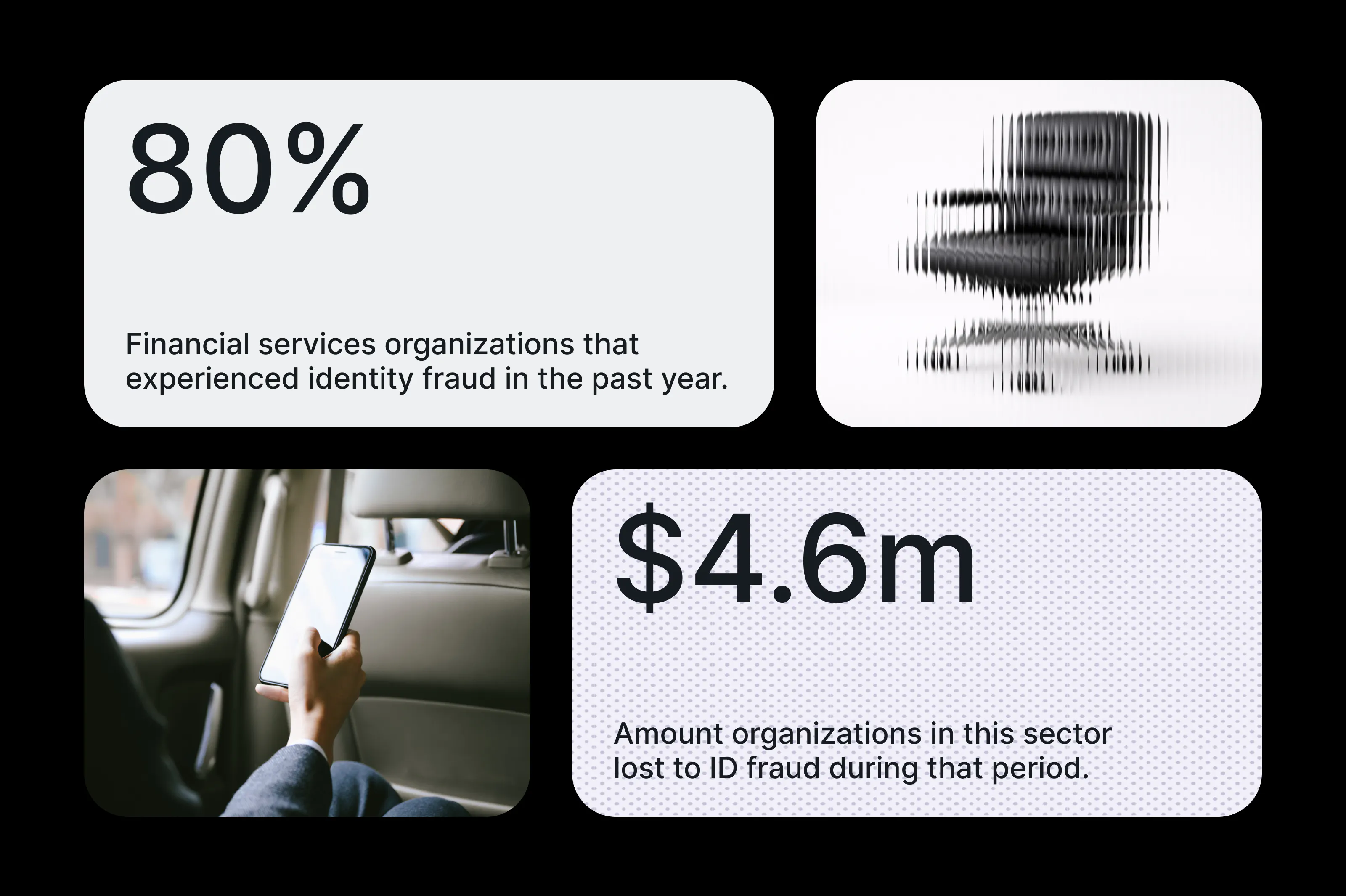
Eighty percent of financial services organizations experienced identity fraud in the past year, the highest rate across all industries surveyed. Even more concerning is that 57% of these companies were targeted more than once.
Compare this to other sectors in the study — consulting, healthcare, legal services, and the public sector. The average share of organizations that experienced identity fraud was much lower at 56%, while 36% were targeted multiple times.
In financial services, more than any other sector, identity fraud is now a persistent and recurring threat rather than a one-off event.
The cost of getting it wrong
Across all industries, organizations impacted by identity fraud reported losing $3.4 million (USD) in the previous 12 months. For financial services, that number was $4.6 million — the second highest of any sector in our study and just behind consulting at $5.3 million.
The fallout of a fraud incident can also extend beyond financial losses. In all sectors, 74% of organizations would be less willing to work with a partner that experienced identity fraud, while 31% said their willingness would significantly decrease.
In industries like financial services that rely on trust, identity fraud doesn't just affect a company's reputation but potentially its entire operations.
How AI-powered fraud impacts agreement workflows
Sixty percent of financial services companies told us their agreement workflows were either 'very vulnerable' or 'extremely vulnerable' to fraud from artificial intelligence. Only legal services expressed greater concern.
So what is this growing threat?
AI fraud may include:
- AI-generated signatures on contracts that look just like real ones
- Forged identity documents made with automated tools
- Deepfake audio and video used to impersonate trusted people during contract signing
It's a danger that's evolving quickly and becoming harder to detect, making verification tools for agreement signing more important than ever.
Just 5% of respondents are confident that their current agreement workflows are secure against AI fraud.
Limited use of eSignature tools in financial services
Just 32% of companies in this sector rely on a dedicated eSignature platform as their primary method for capturing digital signatures, well below the overall survey average of 44%. Use of this technology stands at 80% and 63% for legal services and the public sector, respectively.
Many organizations in the financial services industry have stricter legal, regulatory, and risk management requirements than other sectors, and most eSignatures solutions do not meet required standards. For example, loan contracts, compliance attestations, and other agreements must meet high standards for identity verification and data retention, among other things.
However, the right eSignature platform can provide multiple benefits for companies that adopt them. Half of the companies surveyed say they spend between one hour and several days verifying identities during the signing stage of agreements, while 21% spend more than four hours per agreement. Those who use dedicated eSignature tools waste much less time, with 58% verifying signers in under an hour.
Financial services companies plan to invest more in identity verification
Eighty-seven percent of financial services organizations say they plan to increase spending on identity verification processes and technology over the next 12-24 months, while 45% plan to invest 'significantly more.' While legal services are more likely to invest overall (92%), only 10% of companies in this field plan a significant increase.
AI-powered fraud and its financial consequences seem to be driving this increase in investment. Identity verification is no longer seen as just a compliance requirement or box-ticking exercise. It's now a first layer of defense for agreement workflows, allowing companies to confirm who someone says they are before finalizing a contract.

Download the report
When it comes to identity fraud, financial services is just one part of the story. Download Lumin's Digital identity in business: The threats, impact and opportunities report for additional insights across all industries.

Share this post