
The state of identity fraud 2026: Healthcare and pharma
Healthcare is one of the most targeted sectors for identity fraud, yet it shows the least concern about AI-driven threats. Lumin's research highlights a potential awareness gap and explores what it could mean for the industry's agreement workflows.
Table of contents
- 1. Healthcare is a frequent target
- 2. Why AI-powered fraud is a threat to agreement workflows in healthcare
- 3. eSignature adoption and trust
- 4. Healthcare shows lower support for digital identities
- 5. Healthcare sector less likely to invest in identity verification
- 6. A more proactive approach
- 7. Get the full report
Share this post
Healthcare and pharmaceutical organizations are among the biggest targets for ID fraud. However, they are less likely to invest in identity verification and believe they are less vulnerable to AI-driven threats than other sectors.
These are just some of the findings from Lumin's Digital identity in business: The threats, impact, and opportunities report, which analyzes responses from 1,000 decision makers in different industries. The full data suggests that the healthcare sector may not be seeing the whole picture when it comes to identity fraud.
For similar insights into other industries, see our other guides to identity fraud in the financial services, consulting, legal services, and public sectors.
Healthcare is a frequent target
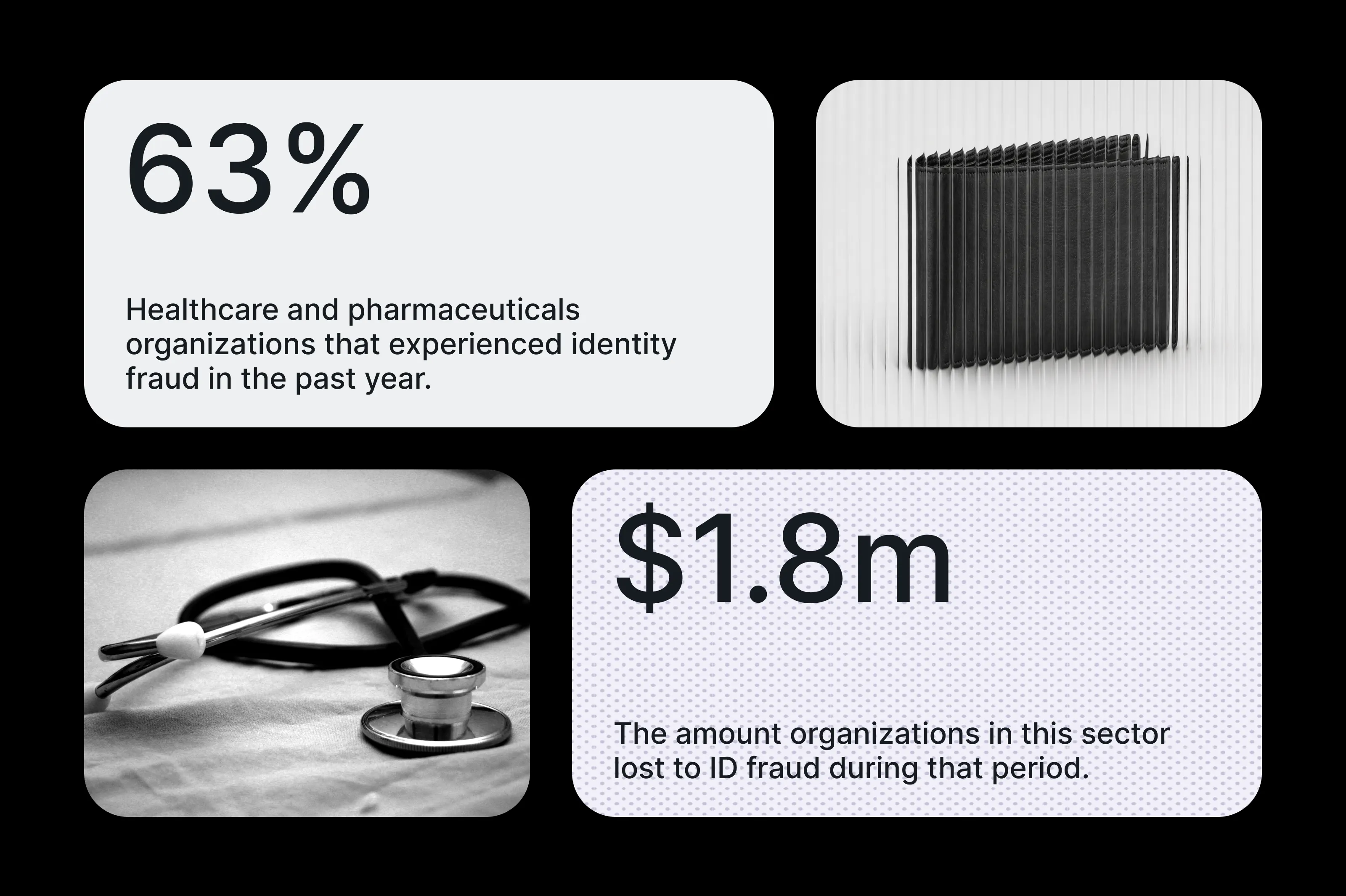
Sixty-three percent of healthcare respondents reported experiencing identity fraud in the last year. This is the third-highest rate of any sector we surveyed, behind financial services (80%) and consulting (68%).
To put things into comparison, 56% of respondents across all industries have experienced at least one incident of identity fraud over the previous 12 months.
It's easy to see why the healthcare industry is at risk. It manages a huge amount of personal information, including medical histories, billing records, and Social Security numbers. This makes the sector particularly vulnerable to identity-based threats, such as impersonation and data tampering.
Identity fraud in healthcare can lead to:
- Fake approvals: When someone uses a fake identity to approve certain medical treatments or prescriptions without proper authorization.
- Fraudulent contracts: When someone poses as a trusted vendor to trick an organization into signing and paying for orders that don't exist.
- Impersonation: When someone pretends to be a healthcare professional to gain access to a system and view patient data.
All of these can compromise patient safety, damage trust, and cause compliance problems with HIPAA and other regulations.
Why AI-powered fraud is a threat to agreement workflows in healthcare
A new type of identity fraud has emerged in recent years, and it could have serious implications for healthcare organizations when reviewing and approving agreements and contracts.
AI-powered fraud occurs when scammers use artificial intelligence to create fake identities, signatures, and documents, allowing them to bypass traditional verification checks.
Here are some examples:
- AI-generated signatures that look just like real ones.
- Clinical or procurement documents made with AI that look genuine.
- Fake driver's licenses, passports, or other identity documents.
- Deepfake audio and video that mimics healthcare professionals.
AI fraud is becoming more prevalent in agreement workflows, especially if identity verification happens remotely. However, our report reveals that many healthcare organizations are still unaware of this threat or are not that concerned about it.
Only 34% of healthcare respondents say their agreement workflows are "very" or "extremely" vulnerable to AI fraud. In contrast, legal services report a much higher level of exposure to this threat, with 86% of decision makers saying their agreement workflows are "very" or "extremely" vulnerable.
If healthcare is less concerned about AI fraud, it doesn't mean the threat is lower. There may simply be a gap in awareness compared to other sectors. AI fraud is becoming increasingly sophisticated and harder to detect, making it easier to manipulate agreement workflows.
eSignature adoption and trust
There's been a massive shift in how healthcare organizations collect and manage signatures, with 40% of respondents in our survey having adopted a dedicated eSignature platform. Forty-four percent of healthcare companies say they have complete trust in their existing eSignature tools, which is the third-highest rate among all the sectors we surveyed.
As mentioned earlier, healthcare may have a lower awareness of AI fraud than other industries. This could explain why its trust in existing eSignature platforms is so high. If decision makers don't fully understand the risks of this emerging threat, they might think the tools they have are sufficient, even if those platforms can't handle more advanced types of fraud.
Interestingly, legal services, where awareness of AI fraud seems to be higher, report lower levels of trust in existing eSignature platforms (only 10% have complete trust). Greater awareness of this threat may make organizations question whether their current tools are truly secure.
Healthcare shows lower support for digital identities
Digital IDs simplify identity verification during agreement signing. They work by verifying a person's identity once through a trusted authority (public or private), so organizations don't have to check documents every time.
Seventy-nine percent of healthcare organizations support government-issued digital IDs. However, this is a lower rate than any other sector. Among those who support them:
- 37% say easier identity verification is the primary benefit
- 22% cite improved security and reduced fraud
- 20% say they make services more convenient and efficient.
Unlike legal services and the public sector, improved security and fraud isn't the top-cited benefit among healthcare organizations that support digital IDs. Again, this might reflect their potentially lower level of awareness of AI fraud risks.
Healthcare sector less likely to invest in identity verification
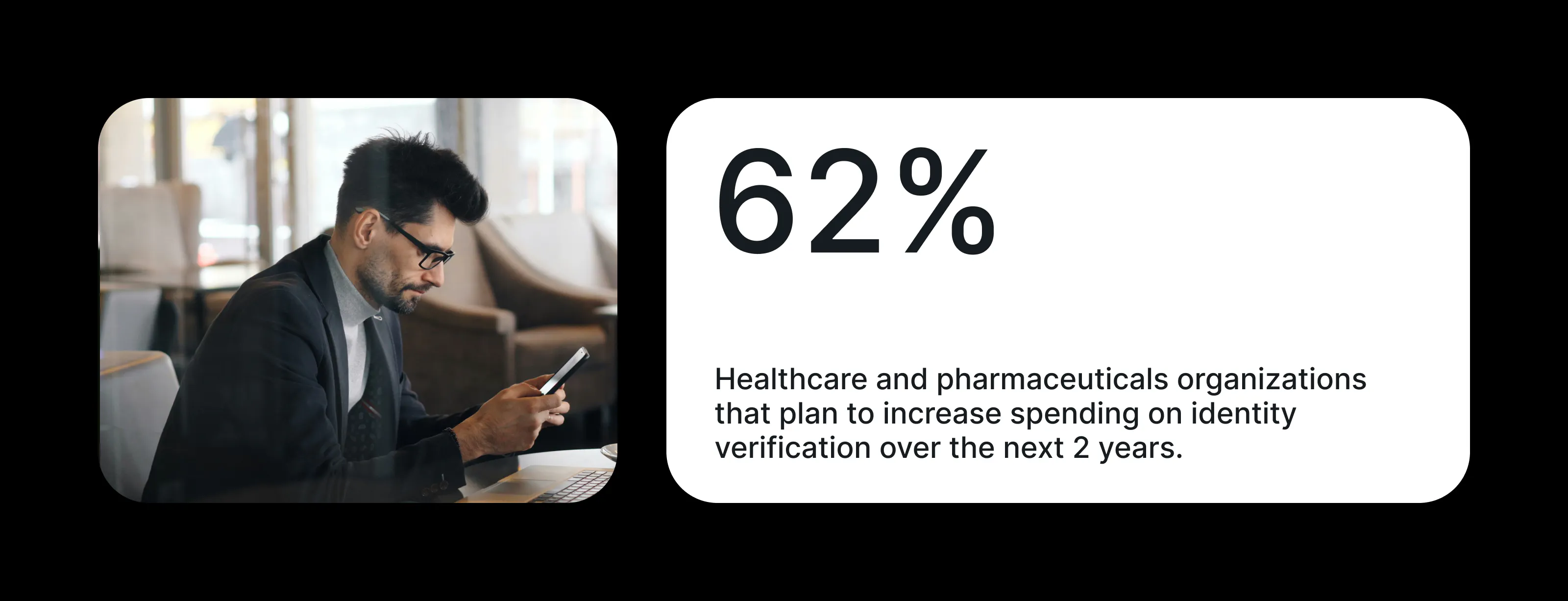
Our report also reveals how industries plan to invest in identity verification tools and processes in the future. Sixty-two percent of decision makers in the healthcare sector plan to increase investment either "moderately" or "significantly" over the next 12-24 months.
While this is still the majority of those surveyed, it's a lower rate than all other sectors. In contrast, 92% of legal services companies plan to increase investment.
A more proactive approach
To sum up, the healthcare sector is a frequent target for identity fraud but perceives itself as less vulnerable to AI threats and is less likely to invest in identity verification than other sectors. This could suggest a gap between current risk exposure and how prepared the industry is for the future.
Healthcare organizations may need to take a more proactive approach to identity verification in the age of AI. This might involve reviewing the security on their eSignature platforms and investing in technologies that keep their data safe.
Get the full report
To learn more about how identity fraud is affecting healthcare and other industries, download Lumin's Digital identity in business: The threats, impact, and opportunities report.

Share this post