
The state of identity fraud 2026: Legal services
Author
Kirk Pepi
Published
May 6, 2026
Categories
Digital trust
Read time
5 mins

Legal services report the lowest identity fraud rates of any sector in Lumin's survey, but they're the most concerned about AI-powered threats. We break down what's driving that gap, how the industry views eSignatures, and why 92% plan to invest more in identity verification.
Table of contents
- 1. Low fraud, high stakes
- 2. The danger of AI-powered fraud
- 3. eSignatures: High adoption, low trust
- 4. The case for digital identities
- 5. Legal services companies are taking action
- 6. The full story on identity fraud
Share this post
A new report from Lumin, Digital identity in business: The threats, impact, and opportunities, reveals how key industries are being impacted by identity fraud — and how they're taking action. Among the 1,000 decision-makers we surveyed, those in legal services report the lowest incidence of identity fraud in the last year, but they are the most concerned about new AI-driven threats that target agreement workflows.
As you'll see below, the sector recognizes these emerging risks and is preparing itself for what lies ahead.
For similar insights into other industries, see our other guides to identity fraud in the financial services, consulting, healthcare, and public sectors.
Low fraud, high stakes
The majority of organizations in our report (56%) have experienced at least one incident of identity fraud over the previous year, with more than a third (36%) experiencing multiple attacks.
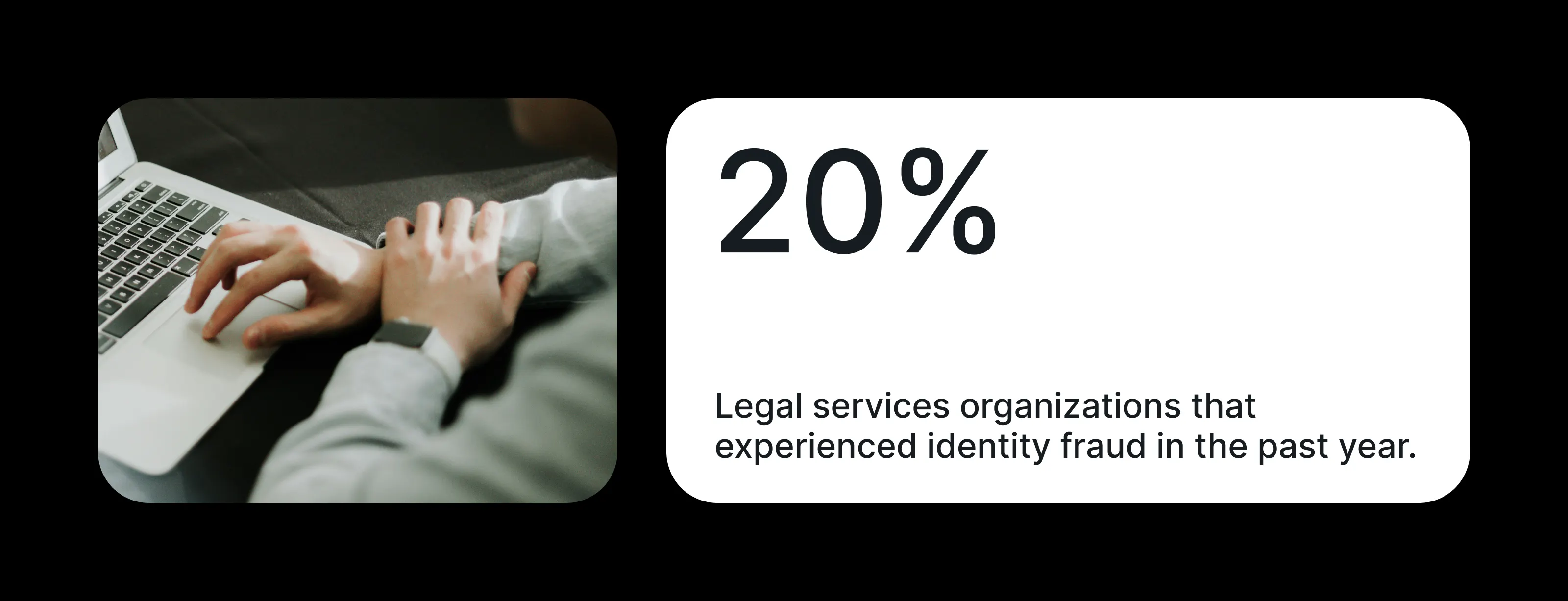
In contrast, only 20% of legal services organizations have reported identity fraud during this time period. Compare this to financial services, for example, where 80% of decision-makers say they experienced at least one incident.
This relatively low fraud rate could be the result of risk awareness, due diligence, and other factors. Many legal professionals are trained to verify identities, scrutinize signatures, and maintain audit trails, all of which can lead to stronger vigilance.
That said, legal services are still at high risk of identity fraud for several reasons. Businesses in this sector handle contracts, legal filings, and other sensitive documents, making them attractive targets for impersonation and tampering. A single fraud event can have massive ramifications, including lost revenue and reputational damage.
The danger of AI-powered fraud
When compared to other industries, the legal services sector is the most worried about AI fraud. A huge 78% of decision-makers say their contracts and agreements are "extremely" vulnerable to this threat, while 8% say they are "very" vulnerable. The cross-industry average is 48%.
Other industries in our report also express a great deal of concern. For example, 60% of financial services companies say they are "extremely" or "very" vulnerable to AI fraud, perhaps because of the high-value data and assets they manage.
AI fraud goes far beyond traditional scams like phishing and social engineering. This category of threat includes:
- Fake identity documents: AI tools can create driver's licenses, passports, and other documents that appear genuine at first glance, potentially allowing fraudsters to bypass a legal company's identity checks.
- Deepfakes: Deepfakes are audio or video clips that have been generated by artificial intelligence. Some are so realistic that they can replicate a person's voice or likeness. Only 17% of legal respondents are “very” or “completely” confident in their ability to detect deepfakes.
- Synthetic identity fraud: This is when scammers combine real and fake information to create new identities. Just 17% of those in the legal services sector feel confident about identifying synthetic identity fraud.
These methods are becoming more sophisticated and harder to detect, even for legal professionals trained in fraud awareness. AI fraud is particularly dangerous in workflows that rely on remote verification, such as collecting and managing eSignatures.
eSignatures: High adoption, low trust
We also wanted to find out about eSignature adoption rates among different industries. eSignature platforms are used more in legal services than any other sector, with 80% of organizations adopting this technology for capturing signatures.
The legal sector is also the most skeptical about these platforms. Only 10% of decision-makers have "complete trust" in the security eSignature tools currently offer, while a huge 87% say this technology could be improved.
This is widely different from the financial sector, where only 32% of organizations use a dedicated eSignature platform as their primary approach for capturing signatures. Many still rely on traditional methods such as wet signatures.
Skepticism in the legal sector may be linked to the recent growth of artificial intelligence. As deepfakes and AI-generated signatures become more common, some legal companies may feel that traditional eSignature tools no longer provide the level of security they need.
Legal services companies might also not trust regular eSignature platforms because they tend to be more cautious than other sectors. As mentioned earlier, legal professionals often deal with high-stakes documents. Accuracy, compliance, and identity verification are critical.
The case for digital identities
Given all the concerns they have, it's no surprise that legal services support advanced solutions for verifying who people say they are.
Overall, 93% of those in the legal services space support the introduction of government-issued digital IDs. Seventy-six percent of decision-makers in this industry support them primarily for their ability to improve security and reduce fraud — more than any other sector.
Digital identities (whether issued by governments or accredited private organizations) can help legal services companies secure agreements and prevent forgery. In comparison, only 16% of financial services organizations support digital IDs for the same reason.
Legal services companies are taking action
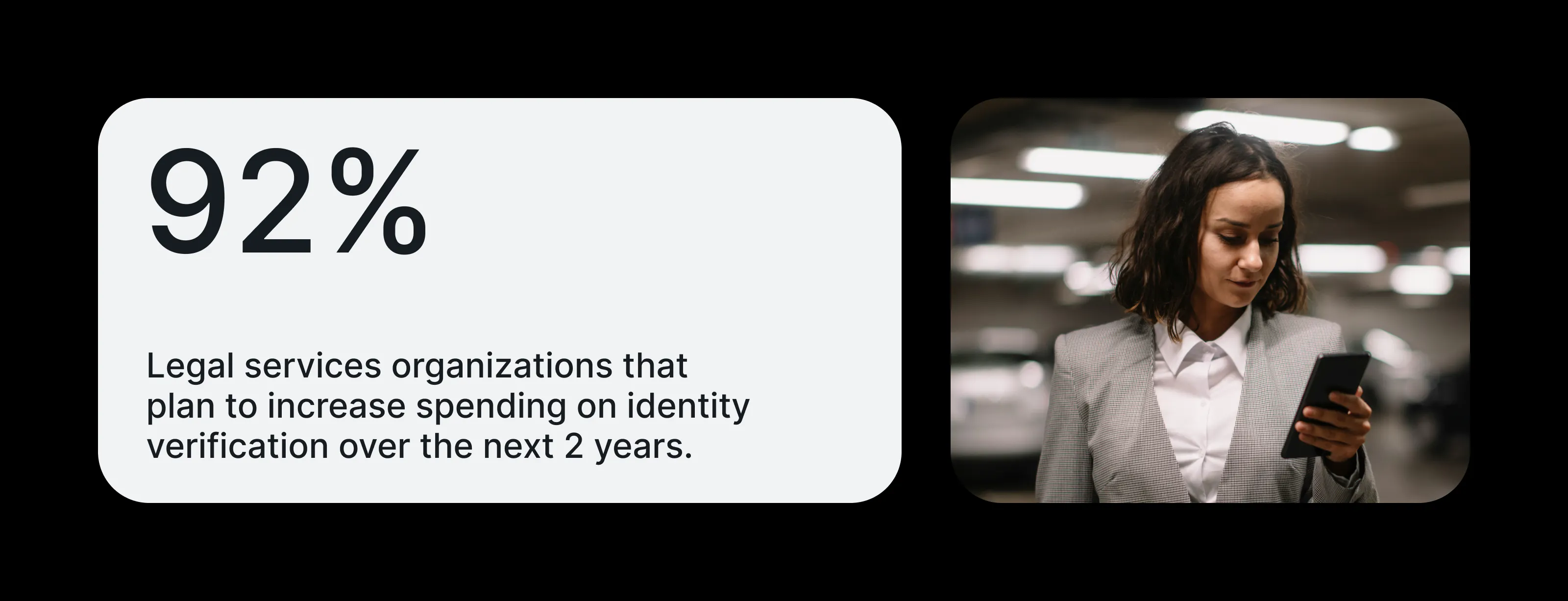
Identity fraud is a growing threat, and the legal sector is quickly preparing for the future. Our report reveals that 92% of decision-makers in this sector plan to invest in identity verification processes and technology over the next 12-24 months, which is the highest rate among all surveyed sectors. Ten percent plan a significant amount of investment, while 82% expect a more moderate increase in spending.
This investment push may be driven by emerging dangers such as AI fraud. By spending more on the latest technologies, legal professionals can strengthen identity verification at the point of signing and improve agreement workflows.
The full story on identity fraud
For a more in-depth look at how identity fraud is impacting legal services and other sectors, download Lumin's new report, Digital identity in business: The threats, impact, and opportunities.
Share this post