
The state of identity fraud 2026: Consulting
Consulting firms lose an average of $5.3 million a year to identity fraud, more than any other sector. Lumin's research unpacks why the industry is such a high-value target, how AI is making attacks harder to detect, and what firms can do to protect their agreement workflows.
Table of contents
- 1. Consulting is a high-value target for identity fraud
- 2. How AI-powered fraud threatens agreement workflows
- 3. The case for digital identities
- 4. Increased investment in identity verification
- 5. How consulting firms can fight back
- 6. Get more insights in Lumin's report
Share this post
While identity fraud impacts organizations in almost every sector, some definitely feel the effects more than others. Take consulting firms that provide advisory services for IT, HR, management, and other areas. They handle large volumes of client data, making them a major focus for fraudsters. AI has made it even easier to carry out attacks at scale in this sector.
To learn more about what's going on, Lumin surveyed 1,000 decision-makers in the U.S., New Zealand, and Australia for a new report, Digital identity in business: The threats, impact, and opportunities. The results reveal just how heavily the consulting industry is being targeted and how it's fighting back.
For similar insights into other industries, see our other guides to identity fraud in the financial services, legal services, healthcare, and public sectors.
Consulting is a high-value target for identity fraud
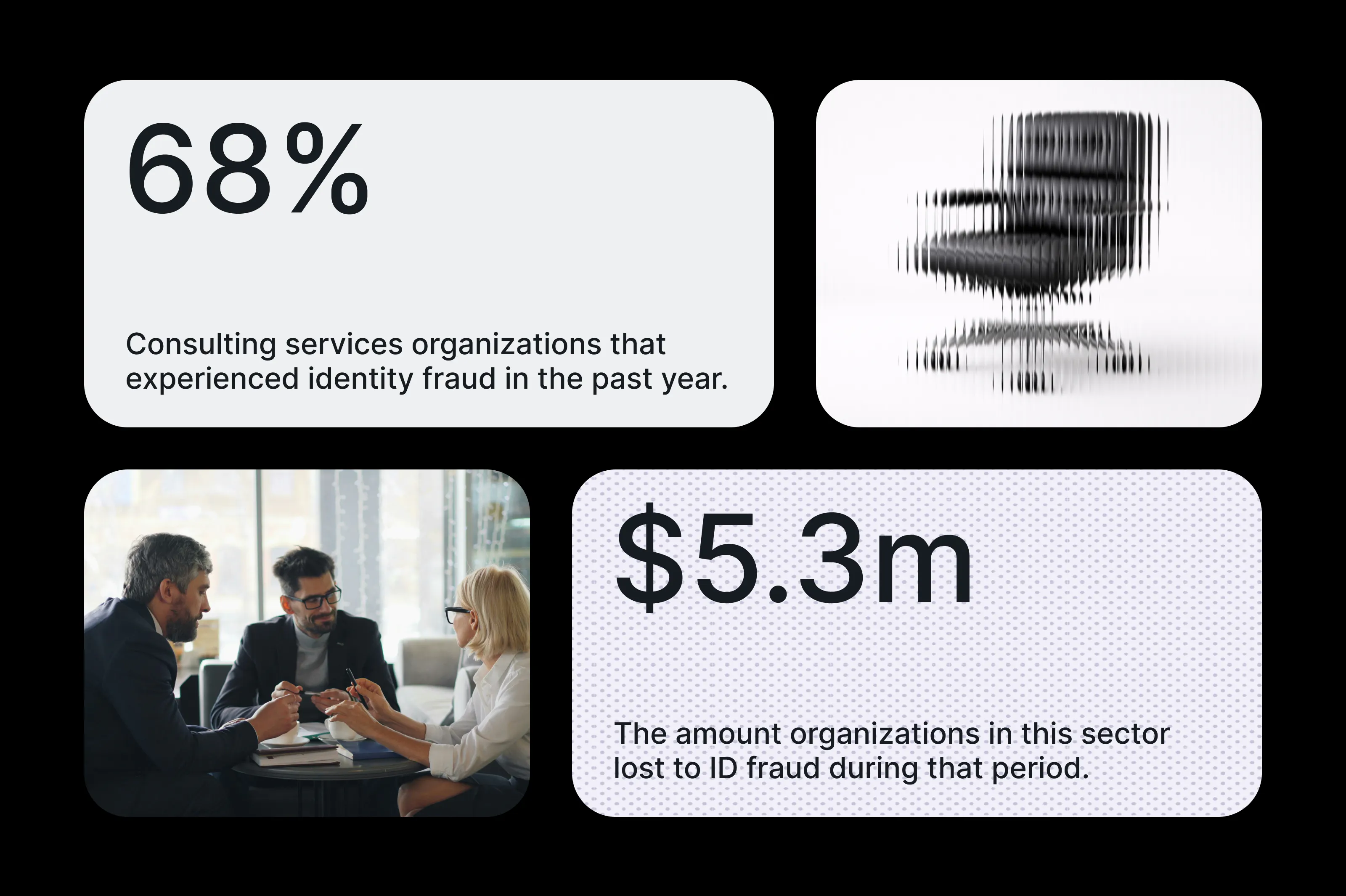
Sixty-eight percent of consulting firms have experienced identity fraud at least once in the past 12 months, and nearly half (49%) have experienced repeat attacks. This makes consulting the second most affected sector in our study, behind only financial services at 80% and well above the cross-industry average of 56%.
But why?
Consulting firms typically manage a great deal of sensitive information and intellectual property, putting them at greater risk of identity theft and impersonation. Companies that handle high-value contracts or work across multiple locations can be even more attractive targets.
Proper identity verification is critical for protecting these organizations from fraud. However, attackers are constantly finding new ways to exploit security vulnerabilities, such as impersonating employees and bypassing identity checks.
Identity fraud is having a massive financial impact on the consulting sector. Across all the industries we surveyed, organizations report average losses of $3.4 million over the past 12 months. However, the average rises to $5.3 million for consulting firms, which is the highest figure in our study.
How AI-powered fraud threatens agreement workflows
Identity fraud has always been difficult to manage, but artificial intelligence is making the problem much worse. More than half of consulting respondents (54%) said their agreement workflows are either "very vulnerable" or "extremely vulnerable" to AI-powered fraud, which can take several forms:
- AI-generated signatures: Fraudsters can now create signatures with AI tools that look almost identical to a real person's. For example, someone might use a colleague's signature on a contract without them knowing.
- Fake documents: AI tools can also create fake identity documents that appear genuine to an untrained eye. These might include passports and driver's licenses. Fraudsters use these counterfeits to bypass identity checks during agreement signing.
- Deepfakes: Another recent trend is fraudsters using AI to create deepfake audio and video clips that look like they feature a real person. For example, someone might send a voice message that appears to come from an executive.
AI-powered fraud can be incredibly damaging for consulting firms, where a good reputation helps win and retain clients. When attackers are able to impersonate executives or bypass identity checks, it's fundamentally bad for business.
The case for digital identities
So, how can consulting firms respond to identity fraud in 2026 and beyond? One potential solution is to adopt digital identities. These provide a simple, standardized way to confirm an individual's identity during agreement signing without the need to manually review documents each time.
In simple terms, a government authority or trusted and verified private organization verifies someone's identity before issuing a secure verifiable digital credential. Your consulting firm can then use that credential to confirm the person's identity every time they sign an agreement.
Our research shows that a huge 88% of organizations across all industries support the introduction of government-issued digital IDs.
That figure is even higher (91%) for those in the consulting space. The main reason is operational efficiency, with 52% of those surveyed saying digital IDs make identity verification easier and streamline interactions between businesses and customers. Seventeen percent of respondents say digital IDs can improve security and reduce fraud.
Increased investment in identity verification
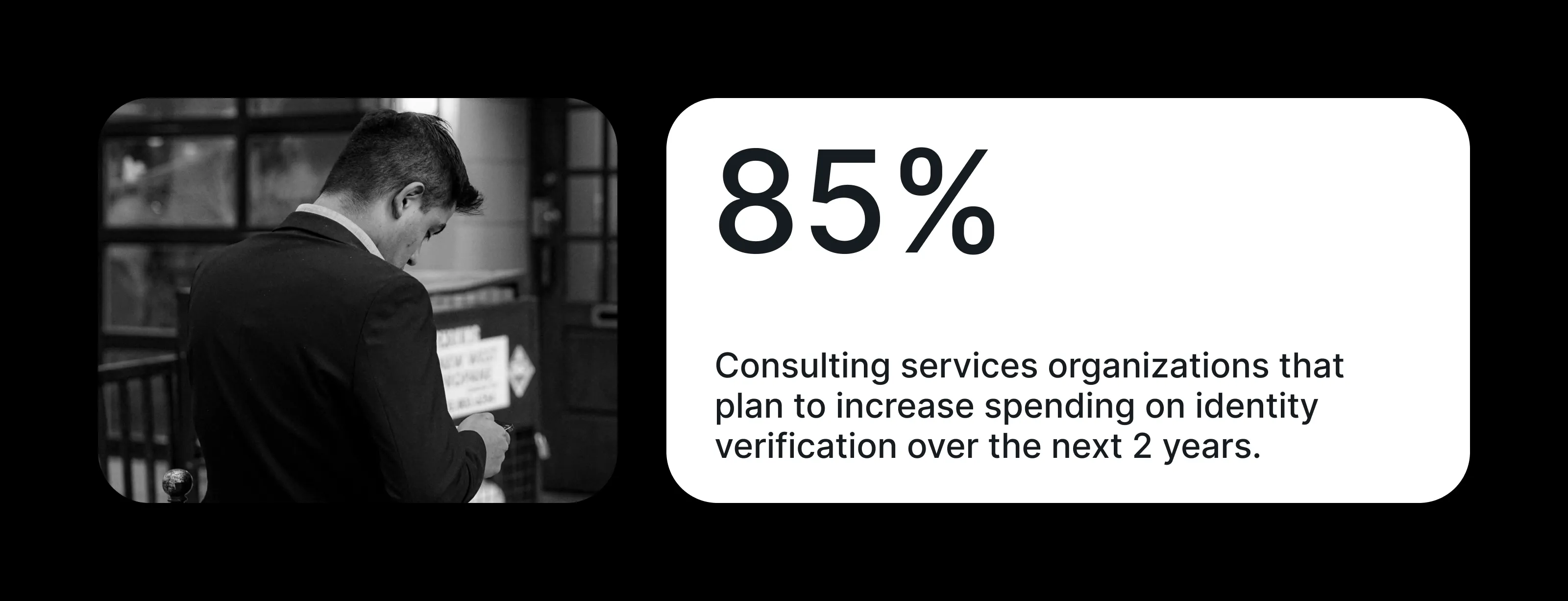
Eighty-five percent of consulting firms say they plan to increase investment in identity verification processes and technology over the next 12-24 months. Among these organizations, 41% intend to invest "significantly more," which is a higher proportion than in other sectors such as healthcare and legal services.
Perhaps the sector is finally realizing that traditional security checks for signing documents are no longer enough. More reliable verification is required to reduce fraud in agreement workflows, especially as AI-powered attacks become more sophisticated.
How consulting firms can fight back
Consulting is the second most impacted industry in our study after financial services — more than two-thirds of respondents experienced some kind of identity fraud event in the last year. The financial fallout is also significant, with consulting firms reporting average losses of $5.3 million. That's more than any other sector.
However, there are steps your organization can take to reduce its exposure to identity fraud — Verified Digital Signing verifies who is actually signing and approving agreements, giving you greater clarity and confidence.
Get more insights in Lumin's report
Download Lumin’s Digital identity in business: The threats, impact, and opportunities report to learn how identity fraud is impacting other sectors such as healthcare, legal services, and financial services.

Share this post